BLOG
ブログ
なぜ今、世界のブランドが『日本製』を求めるのか? 〜国内縫製の価値と、岐阜から世界へ届けるものづくり〜
― 国内縫製の価値と、岐阜から世界へ届けるものづくり ―
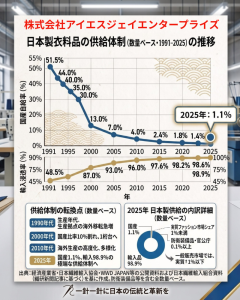
日本国内で流通する衣料品のうち、「日本製」は今やごくわずかな存在となっています。
海外生産への移行が長年にわたって進み、国内の縫製工場は減少を続けてきました。
一方で近年、改めて注目されているのが「Made in Japan」の価値です。
高品質な素材、繊細な縫製、複雑な仕様への対応、そして日本各地に蓄積されてきたものづくりの技術。
特に高付加価値の商品を展開するブランドにとって、「どこで、誰が、どのようにつくったのか」は、商品の価値を構成する重要な要素になりつつあります。
株式会社アイエスジェイエンタープライズは、1969年の創業以来、岐阜の地で国内縫製に携わってきました。
今回は、世界のアパレル生産が大きく変化する中で、改めて「日本で縫うこと」の意味について考えます。
海外縫製工場の競争力は大きく向上している
かつて海外生産の最大の強みは、圧倒的な価格競争力と大量生産能力でした。
しかし現在、その状況は大きく変化しています。
中国をはじめとする海外のOEM・ODM企業では、品質向上はもちろん、小ロット、短納期、企画提案、素材調達から製品までの一貫生産など、対応領域が急速に広がっています。
海外工場の中には10枚、20枚といった小ロットに対応する企業も登場しています。
つまり、
「日本製だから品質が良い」
「国内工場だから小ロットに対応できる」
というだけでは、国内縫製工場の十分な差別化にはならない時代になりました。
だからこそ私たちは、改めて「国内で生産する本当の価値」を考える必要があると思っています。
国内縫製の価値は「縫うこと」だけではない
国内生産の強みは、単純な縫製技術だけではありません。
企画担当者、パタンナー、生地・副資材メーカー、縫製工場などがコミュニケーションを取りながら、商品を完成させていくことができます。
サンプルを確認して、
「この部分を数ミリ修正したい」
「実際に着用するとシルエットが少し違う」
「この素材では縫製方法を変えた方が美しく仕上がる」
といった問題が発生した場合にも、国内であれば迅速な確認や修正を行いやすくなります。
特に、高級婦人服やデザイン性の高い商品、扱いの難しい素材、多工程を必要とする製品では、この「細かな調整の積み重ね」が最終的な商品の完成度を大きく左右します。
単純な1着当たりの縫製単価だけでは測ることのできない部分です。
大量生産から「必要な数量を、必要な時に」へ
アパレル業界の生産方法そのものも変化しています。
以前のように大量の商品を先行生産するだけではなく、最初の生産数量を抑え、店頭やEC、SNSなどで消費者の反応を確認してから追加生産する考え方が広がっています。
売れるかどうか分からない商品を大量に抱えることは、ブランドにとって大きな在庫リスクになります。
そのため、
「まず少量で生産する」
「販売状況を見る」
「売れた商品を素早く追加する」
という生産体制の重要性が高まっています。
こうした時代だからこそ、ブランドと工場との距離が近い国内生産には、新しい役割があると考えています。
「日本製」をつくる人まで伝える時代へ
もう一つ大きな変化があります。
それは、単に商品タグへ「Made in Japan」と記載するだけではなく、
どこの工場で、どのような人たちが、どのような技術を使ってつくったのか
という背景まで消費者へ伝える動きです。
日本各地には、それぞれ特徴を持つ繊維産地があります。
素材をつくる企業。
染色・整理加工を行う企業。
パターンをつくる人。
裁断する人。
ミシンを扱う縫製技術者。
仕上げや検品を担当する人。
一着の洋服が完成するまでには、多くの技術と人の手が関わっています。
これまで工場は、ブランドの後ろ側で商品をつくる存在であることが一般的でした。
しかしこれからは、その「つくり手」そのものが商品の価値になる時代だと私たちは考えています。
1969年創業。岐阜で培ってきた縫製技術
株式会社アイエスジェイエンタープライズは、1969年創業。
2026年で創業57周年を迎えました。
岐阜県は、長年にわたり日本のアパレル産業を支えてきた地域の一つです。
私たちもその中で、時代とともに変化する素材やデザイン、仕様に対応しながら、国内でのものづくりを続けてきました。
特に婦人服では、美しいシルエットや着用感を実現するため、素材の特性を理解した縫製が求められます。
薄地、伸縮性の高い素材、滑りやすい素材などは、同じ仕様であっても素材によって縫い方や扱い方を調整しなければなりません。
こうした対応は、設備だけで完結するものではありません。
長年の経験から培われる「人の技術」も重要です。
Made in Japanを「価格」ではなく「価値」で考える
国内縫製と海外縫製を、単純な加工賃だけで比較すれば、日本国内の方が高くなるケースは少なくありません。
しかし商品づくりに必要なコストは、縫製工賃だけではありません。
輸送期間、在庫数量、サンプル修正、仕様変更、検品、不良発生時の再加工、追加生産など、商品が販売されるまでには多くの工程があります。
そのすべてを含めて考えた時、国内生産がブランドにとって合理的な選択になる商品もあります。
特に、
高付加価値商品 高級婦人服 限定商品 複雑な仕様の商品 難素材を使用する商品 多品種・小ロット商品 短期間で追加生産が必要な商品
知的財産を有する商品
などは、国内生産の特徴を活かしやすい分野です。
私たちは、「海外生産か国内生産か」という単純な二者択一ではなく、商品の特徴や販売方法に応じて、国内で生産する価値がある商品を提案していくことが重要だと考えています。
日本の縫製技術を、次の時代へ
日本国内の縫製産業を取り巻く環境は決して簡単ではありません。
工場数の減少、技術者の高齢化、人材不足、賃金やエネルギーコストの上昇など、さまざまな課題があります。
しかし一方で、日本の素材や加工技術、丁寧なものづくりを評価する市場は国内外に存在しています。
だからこそ、これまで培われてきた技術を単に守るだけではなく、新しいブランド、新しい素材、新しい販売方法と組み合わせ、次の世代へつないでいくことが必要です。
株式会社アイエスジェイエンタープライズは、これからも岐阜の縫製工場として、長年培ってきた技術を大切にしながら、新しいものづくりにも挑戦してまいります。
国内縫製・日本製委託加工をご検討の企業様へ
株式会社アイエスジェイエンタープライズでは、国内縫製、日本製委託加工、高付加価値商品の生産についてご相談を承っております。
「国内で生産できる工場を探している」
「海外生産から一部商品を国内生産へ切り替えたい」
「高級ラインの商品を日本でつくりたい」
「難しい素材や仕様について相談したい」
「小ロットから商品化を検討したい」
など、商品の企画・仕様に応じてご相談ください。
1969年の創業以来、岐阜で培ってきた縫製技術を活かし、これからの時代に求められるMade in Japanのものづくりに取り組んでまいります。
株式会社アイエスジェイエンタープライズ 岐阜県岐阜市 国内縫製・日本製・婦人服縫製Why Global Brands Are Looking to “Made in Japan”
The Value of Domestic Sewing and Manufacturing — Bringing Japanese Craftsmanship from Gifu to the World
Today, only a small percentage of the apparel sold in Japan is actually made in Japan.
For decades, apparel production has steadily shifted overseas, while the number of domestic sewing factories has continued to decline.
At the same time, however, the value of “Made in Japan” is once again attracting attention.
High-quality textiles, meticulous sewing, the ability to handle complex specifications, and generations of manufacturing expertise developed throughout Japan all contribute to the distinctive value of Japanese production.
For brands creating premium and high-value products in particular, where a product is made, who makes it, and how it is made are becoming increasingly important elements of the product itself.
Founded in 1969, ISJ Enterprise Co., Ltd. has been engaged in domestic apparel manufacturing in Gifu, Japan, for more than half a century.
As the global apparel manufacturing landscape continues to evolve, we would like to take a closer look at what it means — and why it still matters — to manufacture garments in Japan.
Overseas Sewing Factories Are Becoming More Competitive
Traditionally, the greatest advantages of overseas manufacturing were lower production costs and large-scale production capacity.
Today, however, the situation has changed significantly.
OEM and ODM manufacturers in China and other countries have improved not only their quality, but also their capabilities in small-lot production, short lead times, product development, material sourcing, and integrated manufacturing.
Some overseas factories now accept production runs as small as 10 or 20 pieces.
This means that statements such as:
“Made in Japan means higher quality.”
or
“Japanese factories can handle small production runs.”
are no longer enough on their own to differentiate Japanese manufacturers from global competitors.
That is precisely why we believe it is important to reconsider the true value of manufacturing in Japan.
The Value of Japanese Manufacturing Goes Beyond Sewing
The strength of domestic manufacturing is not simply the ability to sew garments.
Designers, product planners, pattern makers, textile and trim suppliers, and sewing factories can communicate closely throughout the development and production process.
After reviewing a sample, for example, a brand may decide:
“This section needs to be adjusted by a few millimeters.”
“The silhouette looks slightly different when the garment is actually worn.”
“This fabric would achieve a better finish with a different sewing method.”
When issues such as these arise, domestic production makes it easier to communicate, review the product, and implement modifications quickly.
This becomes particularly important for premium womenswear, highly designed garments, difficult-to-handle fabrics, and products involving complex manufacturing processes.
In these categories, countless small adjustments can ultimately determine the quality of the finished garment.
This value cannot always be measured simply by comparing the sewing cost per garment.
From Mass Production to “The Right Quantity at the Right Time”
The apparel industry is also changing the way it approaches production.
Rather than producing large quantities far in advance, more brands are beginning with smaller initial production runs and then using sales results, e-commerce data, store performance, and social media response to determine whether additional production is necessary.
Holding large inventories of products before knowing whether they will sell represents a significant financial risk for brands.
As a result, production models are increasingly shifting toward:
Produce a smaller initial quantity.
Evaluate market response.
Quickly replenish products that perform well.
This approach makes flexible production and responsive supply chains increasingly important.
In this environment, domestic manufacturing can play a new and important role because of the close physical and operational relationship between brands and their manufacturing partners.
A New Era: Communicating the People Behind “Made in Japan”
Another important change is taking place.
It is no longer enough simply to attach a label that says “Made in Japan.”
Increasingly, consumers and brands want to know:
Where was the product made?
Who made it?
What skills and techniques were used?
Japan is home to many textile and apparel manufacturing regions, each with its own specialized expertise.
Textile manufacturers.
Dyeing and finishing specialists.
Pattern makers.
Cutting technicians.
Skilled sewing machine operators.
Pressing and finishing professionals.
Quality-control specialists.
A single garment is completed through the combined expertise and craftsmanship of many people.
Traditionally, sewing factories have remained behind the scenes, manufacturing products under the names of the brands they serve.
We believe this is changing.
The people, skills, factories, and manufacturing stories behind a garment are increasingly becoming part of the product’s value.
Founded in 1969 — Sewing Expertise Developed in Gifu, Japan
ISJ Enterprise Co., Ltd. was founded in 1969.
In 2026, we celebrate our 57th anniversary.
Gifu has long been one of the regions that supported Japan’s apparel and textile industry.
For more than half a century, we have continued manufacturing garments in Japan while adapting to changing fabrics, designs, specifications, and market requirements.
Womenswear, in particular, requires careful understanding of fabric characteristics in order to achieve a beautiful silhouette and comfortable fit.
Lightweight fabrics, highly stretchable materials, slippery fabrics, and other technically demanding textiles cannot always be handled in exactly the same way.
Even when garment specifications remain unchanged, sewing techniques and production methods may need to be adjusted according to the characteristics of the material.
This cannot be achieved through machinery alone.
It also requires the knowledge, judgment, and craftsmanship developed through years of experience.
Considering “Made in Japan” in Terms of Value — Not Price Alone
When Japanese and overseas sewing factories are compared solely on manufacturing cost, domestic Japanese production will often be more expensive.
However, sewing cost alone does not represent the total cost of bringing an apparel product to market.
Transportation time, inventory levels, sample revisions, specification changes, inspections, reworking defective products, and additional production all contribute to the true cost of manufacturing.
When these factors are considered together, domestic production can be a commercially rational choice for certain products and business models.
Japanese domestic production can be particularly suitable for:
Premium and high-value apparel Luxury womenswear Limited-edition collections Garments with complex specifications Products made from technically difficult fabrics Multi-style, small-lot production Products requiring rapid replenishment or additional production
For this reason, we do not believe the question should simply be:
“Overseas production or Japanese production?”
Instead, brands should consider which production model is most appropriate for each product, price range, sales strategy, and market.
Our role is to help identify products for which manufacturing in Japan can create genuine value.
Passing Japanese Sewing Expertise to the Next Generation
The environment surrounding Japan’s domestic sewing industry remains challenging.
The declining number of sewing factories, an aging skilled workforce, labor shortages, rising wages, higher energy costs, and other structural challenges are affecting manufacturers throughout the country.
At the same time, there remains strong appreciation — both in Japan and internationally — for Japanese textiles, processing technologies, craftsmanship, precision, and attention to detail.
That is why preserving these skills alone is not enough.
They must also be connected with new brands, new materials, new technologies, and new ways of selling apparel.
Japanese manufacturing expertise must continue to evolve if it is to be passed on to future generations.
At ISJ Enterprise Co., Ltd., we will continue to value the sewing expertise we have developed in Gifu since 1969 while embracing new approaches to apparel manufacturing.
Our goal is to contribute to the next generation of Made in Japan.
For Brands and Companies Looking for Japanese Apparel Manufacturing Partners
ISJ Enterprise Co., Ltd. welcomes inquiries regarding domestic Japanese sewing, Made-in-Japan OEM production, and high-value apparel manufacturing.
Please contact us if you are looking for:
“A reliable sewing factory in Japan.”
“A Japanese manufacturing partner for selected products currently produced overseas.”
“Made-in-Japan production for a premium or luxury collection.”
“A factory capable of discussing difficult fabrics or complex specifications.”
“Small-lot production for a new product or collection.”
We work with our clients according to the individual design, materials, specifications, production volume, and requirements of each product.
Since our founding in 1969, we have developed our manufacturing expertise in Gifu, one of Japan’s historic apparel-producing regions.
We will continue to apply that experience to creating the kind of Made in Japan products demanded by the next generation of brands and consumers.
ISJ Enterprise Co., Ltd. Gifu City, Gifu, Japan
Japanese Apparel Manufacturing / Made-in-Japan OEM / Womenswear SewingOTHERSその他の記事


Japan Qualityの真髄。岐阜の縫製工場(sewing factory)が証明する、品質・倫理・技能の三位一体。国内縫製工場アイエスジェイエンタープライズ
続きをみる
【ISJ Enterprise】縫製生産・ご相談フォーム公開のお知らせ(Google Form)Announcement: Sewing Production & Inquiry Form Now Available. garment factory
続きをみる
世界が憧れる「Made in Japan」を、御社のブランドへ。Bring the World’s Most Admired “Made in Japan” to Your Brand. garment factory
続きをみる
サンプル〜量産までの流れ:初回お問い合わせでご用意いただきたい資料 From Sampling to Bulk Production: What to Prepare for Your First Inquiry
続きをみる
For Global Luxury Brands ISJ Enterprise Co., Ltd. (Gifu City, Japan) – Japanese Sewing Factory. garment factory
続きをみる
サプライチェーンの安定と国内回帰の重要性(garment factory)──今、「メイド・イン・ジャパン」が選ばれる確かな理由 日本製国内縫製工場アイエスジェイエンタープライズ
続きをみるCONTACTお問い合わせ
縫製をご依頼されたい法人様へ
まずはお気軽にお問い合わせください。
 お問い合わせ