BLOG
ブログ
繊維製品の海外生産と国内生産のリスクとメリット 岐阜の国内縫製工場アイエスジェイエンタープライズ
**繊維製品の海外生産と国内生産のリスクとメリット
–– アパレルブランドが今見直すべき「最適な生産拠点」––**
アパレル業界では長年、コスト重視の海外生産が主流でした。しかし近年は国際情勢の変化や国際紛争リスク、物流の不安定化、品質トラブルといった課題が表面化し、**「国内生産の価値」**が再び注目されています。
本記事では、海外生産と国内生産のリスク・メリットを専門的に比較し、アパレルブランドが最適な生産戦略を選ぶためのポイントを解説します。
お問い合わせはこちら
1. 海外生産のメリット
① 生産コストの低さ
中国・ベトナム・バングラデシュなどは人件費が安く、大ロット量産のコスト最適化に優れています。数万枚以上の量産を前提としたブランドにとって大きなメリットです。
② 大量生産に強い
海外の大手縫製工場は規模が大きく、数十万〜数百万枚規模の生産にも対応可能。短期間で大量の商品供給が必要なブランドには魅力的な選択肢です。
③ 多様な素材の調達性
世界の素材市場が集中しており、独自の生地や加工の選択肢が広いことも海外生産の強みです。
2. 海外生産のリスク
① 国際情勢リスク(地政学リスク)
最近は以下のようなリスクが顕著です:
-
中国・台湾情勢の緊張
-
中東地域の不安定化
-
海運ルートの混乱
-
米中対立に伴う規制強化
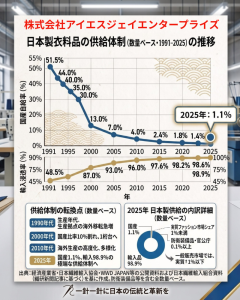
アパレルは輸入依存度98%以上のため、供給停止はブランドに深刻な影響を及ぼします。
② 品質トラブル・再現性の低さ
海外工場は生産ラインごとに技術のばらつきがあり、
「サンプルは良いのに量産で品質が落ちる」
という問題が頻繁に発生します。
寸法精度・縫製仕様・仕上げ品質など、日本ブランド特有の要求に対応しきれないケースも。
③ コミュニケーションコスト
-
言語の壁
-
時差
-
文化の違い
-
仕様書の理解不足
これらにより、トラブル発生時の修正対応に時間とコストがかかります。
④ 物流の不安定化
-
海運遅延
-
国際輸送費の高騰
-
港湾混雑
-
輸送途中の停止
納期遵守が求められるアパレル企業にとって大きなリスクです。
3. 国内生産のメリット
① 世界トップクラスの品質と再現性
日本の縫製工場は、仕上がりの美しさ・縫製精度・寸法の安定性・検品品質で世界的に高評価を受けています。
株式会社アイエスジェイエンタープライズが強みとする:
-
布帛・カットソー両対応
-
精密縫製(袋縫い・パイピング等)
-
高難度アイテム
-
レギンスパンツ専門ライン
-
グループ会社(縫製工場)との連携による大ロット対応
これらは日本の職人技術と管理体制があってこそ実現できる品質領域です。
② コミュニケーションが早い
-
仕様変更
-
サンプル修正
-
急な増産調整
すべて短時間で完結できるスピード感が国内生産の大きなメリットです。
③ トラブル対応の速さ
不良発見・縫製ミス・寸法調整などを、現場で直接確認し迅速に修正できるため、
急ぎの案件でも安心して任せることができます。
④ 地政学リスクを受けにくい
海外のように国際紛争や海運混乱に左右されず、安定供給が可能です。
4. 国内生産のリスク
① コストが高い
日本は人件費が高く、製品単価が海外に比べて高くなりやすい傾向があります。
② 小ロット中心
数百万枚の超大ロット生産には向かず、得意分野は小〜大ロットとなります。
5. 結論:海外+国内の「ハイブリッド生産」が最適解
現在のように世界情勢が不安定な時代には、
海外生産だけに依存することは大きなリスクを伴います。
そのため多くのアパレルブランドが、
-
基幹商品は国内で品質確保
-
大量ロットは海外でコスト最適化
というハイブリッド発注へと移行しています。
株式会社アイエスジェイエンタープライズでは、
国内製造の高品質・高速対応を活かしつつ、ブランドの生産計画に合わせた最適な生産戦略をご提案しています。
6. ISJ Enterprise が選ばれる理由
-
JASTI(Japan Apparel Sewing Technical Institute)適合基準レベルの品質
-
布帛・カットソー両対応
-
レギンスパンツ専門ラインの生産力
-
職人比率の高い技術集団
-
サンプルの高速対応
-
高級アパレルブランド・インフルエンサー商品の実績多数
-
グループ会社との連携による安定供給とロット拡大
7. まとめ
海外生産はコスト面で優れていますが、
品質・スピード・供給安定性という観点では国内生産の価値は急速に高まっています。
アパレル業界が今求めるのは、
「不安定な国際情勢に左右されない安定供給」と「品質の再現性」
その中心にあるのが、国内縫製の強みです。
お問い合わせはこちら
**Risks and Benefits of Overseas and Domestic Production in Textile Manufacturing
–– Why Apparel Brands Are Reconsidering Their “Optimal Production Base” ––**
For many years, the apparel industry has relied heavily on overseas production to reduce costs. However, recent changes in global politics, international conflict risks, unstable logistics, and increasing quality issues have led many brands to rediscover the value of domestic production in Japan.
This article compares the risks and benefits of both overseas and domestic manufacturing, offering insights for brands seeking the most effective production strategy.
1. Benefits of Overseas Production
1) Lower Production Costs
Countries such as China, Vietnam, and Bangladesh offer significantly lower labor costs, making them highly suitable for large-scale mass production. For brands dealing with tens of thousands of units, overseas production remains an attractive, cost-efficient choice.
2) High Capacity for Mass Production
Large factories overseas are capable of producing hundreds of thousands to millions of units, enabling brands to secure high-volume supply within short lead times.
3) Wide Availability of Materials
Major textile markets and dyeing facilities are concentrated overseas, providing access to a wide range of materials and processing methods.
2. Risks of Overseas Production
1) Geopolitical Risks
Recent global instability has increased uncertainty:
-
Rising tensions between China and Taiwan
-
Instability in the Middle East
-
Disruptions in maritime shipping routes
-
Regulatory tightening due to U.S.–China conflicts
With Japan’s apparel market relying on over 98% imported products, supply chain disruptions can be catastrophic for brands.
2) Quality Issues and Lack of Reproducibility
Many overseas factories struggle with consistent quality across production lines, often resulting in:
“Good samples, poor mass production.”
Japanese brands also require higher standards—dimensional accuracy, sewing precision, and finishing quality—that some overseas suppliers cannot fully replicate.
3) Communication Barriers
Quality issues are often exacerbated by:
-
Language barriers
-
Time zone differences
-
Cultural gaps
-
Misinterpretation of specifications
These factors increase cost and time when problems arise.
4) Unstable Logistics
Recent years have seen:
-
Shipping delays
-
Increased international freight costs
-
Port congestion
-
Unexpected transport interruptions
For brands that must meet strict delivery schedules, these risks are significant.
3. Benefits of Domestic Production in Japan
1) World-Class Quality and Reproducibility
Japanese sewing factories are globally recognized for excellence in:
-
Dimensional accuracy
-
Sewing precision
-
Finishing quality
-
Inspection and quality control
At ISJ Enterprise, we specialize in:
-
Both woven and knitwear production
-
Precision sewing (piping, bag seams, delicate materials)
-
High-difficulty items
-
A dedicated leggings production line
-
Collaboration with group factories for expanded capacity
These strengths are supported by the craftsmanship and rigorous management unique to Japan.
2) Fast and Reliable Communication
Domestic production enables fast responses for:
-
Specification changes
-
Sample adjustments
-
Urgent production requests
This speed provides significant value for brands with tight schedules.
3) Immediate Response to Problems
Issues such as defects, sewing errors, or size adjustments can be checked directly at the factory and resolved quickly—an essential benefit for time-sensitive projects.
4) Lower Exposure to Geopolitical Risks
Domestic production avoids the unpredictable risks of international conflict and logistics disruptions, ensuring stable and reliable supply.
4. Risks of Domestic Production
1) Higher Costs
Labor costs in Japan are higher, making domestic production more expensive compared to overseas manufacturing.
2) Limited Capacity for Extra-Large Orders
Domestic factories handle small to medium-sized lots well, but are not suited for extremely large-scale production of hundreds of thousands to millions of units.
5. Conclusion: A Hybrid Production Model is the Optimal Solution
Given today’s unstable global environment, relying solely on overseas production is increasingly risky.
Many brands are now adopting a hybrid model:
-
Core items produced domestically to ensure quality and stability
-
Large-volume items produced overseas to optimize cost
At ISJ Enterprise, we offer strategic proposals that combine the advantages of domestic production—high quality and fast turnaround—with your overall production plan.
6. Why Brands Choose ISJ Enterprise
-
Quality levels meeting JASTI (Japan Apparel Sewing Technical Institute) standards
-
High technical expertise with skilled craftsmen
-
Capable of both woven and knit sewing
-
Dedicated leggings production line
-
Rapid sample production
-
Proven track record with luxury brands and influencer apparel
-
Stable supply through cooperation with group factories
7. Summary
Overseas production excels in cost efficiency, while domestic production provides unmatched quality, precision, and supply stability.
In today’s apparel market, brands increasingly prioritize:
“Stable supply unaffected by global instability”
and
“High reproducibility of quality.”
As a result, the value of Japanese domestic manufacturing continues to rise.
OTHERSその他の記事


Japan Qualityの真髄。岐阜の縫製工場(sewing factory)が証明する、品質・倫理・技能の三位一体。国内縫製工場アイエスジェイエンタープライズ
続きをみる
【ISJ Enterprise】縫製生産・ご相談フォーム公開のお知らせ(Google Form)Announcement: Sewing Production & Inquiry Form Now Available. garment factory
続きをみる
世界が憧れる「Made in Japan」を、御社のブランドへ。Bring the World’s Most Admired “Made in Japan” to Your Brand. garment factory
続きをみる
サンプル〜量産までの流れ:初回お問い合わせでご用意いただきたい資料 From Sampling to Bulk Production: What to Prepare for Your First Inquiry
続きをみる
For Global Luxury Brands ISJ Enterprise Co., Ltd. (Gifu City, Japan) – Japanese Sewing Factory. garment factory
続きをみる
サプライチェーンの安定と国内回帰の重要性(garment factory)──今、「メイド・イン・ジャパン」が選ばれる確かな理由 日本製国内縫製工場アイエスジェイエンタープライズ
続きをみる
High-Quality Sewing Services from Gifu, Japan ISJ Enterprise Co., Ltd. (Gifu City, Japan) – Japanese Sewing Factory. (garment factory)
続きをみる
CONTACTお問い合わせ
縫製をご依頼されたい法人様へ
まずはお気軽にお問い合わせください。
 お問い合わせ